


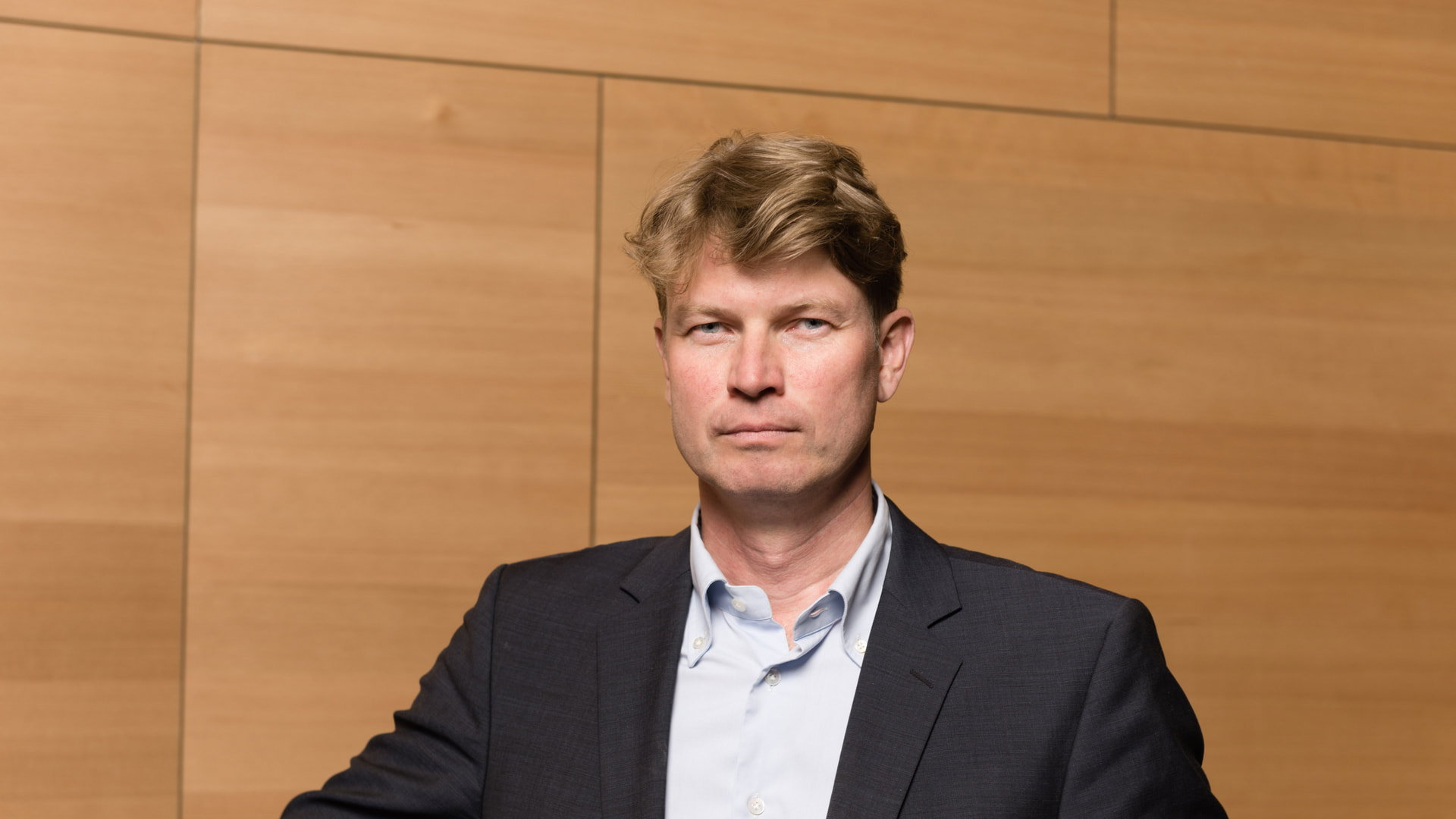
© © Peter Adamik
Ole Bækhøj has been the Director of the Pierre Boulez Saal in Berlin since its inception in 2015. Born in Denmark, he studied double bass in Aarhus and Amsterdam and pursued management studies at the AVT Business School in Copenhagen. After performing as a bassist for several years, including with the Royal Concertgebouw Orchestra, he was appointed General Manager of the London-based Gabrieli Consort and Players in 2001. He subsequently worked as Artistic and Executive Director of the Danish National Symphony Orchestra from 2008 and 2012, where he oversaw the opening of the new concert hall in Copenhagen. Prior to being invited by Daniel Barenboim to join the Pierre Boulez Saal, he served as Chief Executive of the Mahler Chamber Orchestra in Berlin.
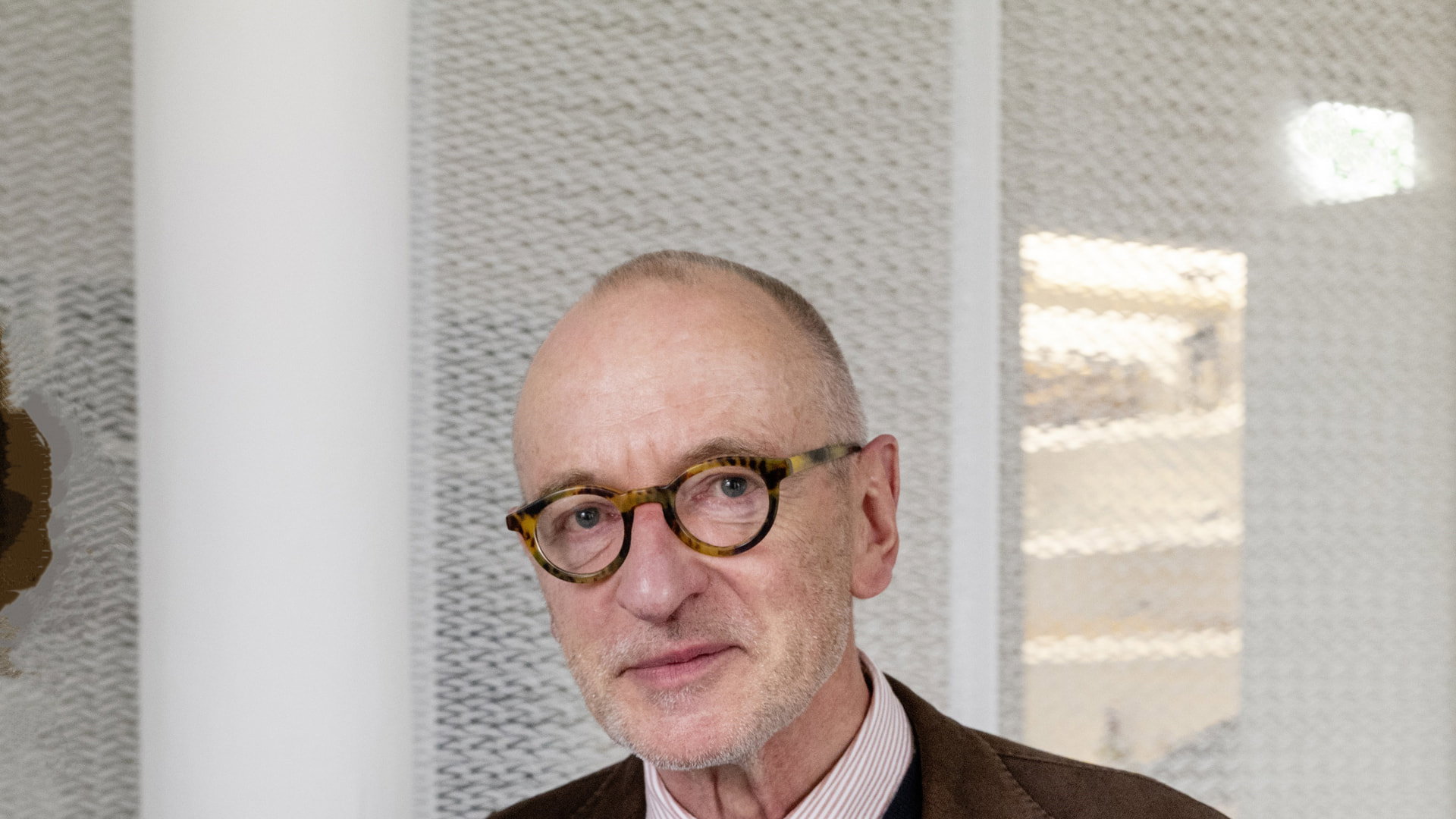
Professor Dr. Dr. h.c. Ulrich Raulff has been President of ifa (Institut für Auslandsbeziehungen) since 1 October 2018. Ulrich Raulff was born in Hülseberg near Meinerzhagen in 1950. He studied philosophy and history in Marburg, Frankfurt and Paris, earning his PhD in 1977. From 1978 to 1993 he was a freelance translator and employee of several German publishing companies, newspapers and TV stations. He qualified as a professor in Cultural Studies at the Humboldt-University of Berlin in 1995. From 1994 to 2001 he was a literary editor of the 'Frankfurter Allgemeine Zeitung', from 1997 chief literary editor, and from 2001 to 2004 he was senior literary editor of the 'Süddeutsche Zeitung'. From November 2004 to September 2018 Ulrich Raulff was director of the German Literature Archive Marbach.
Speech: Presentation of the ifa Award on 14.02.2024
Representatives of the Ukraine 5 AM Coalition – Lyubov Smachylo, Olena Zadorozhna, Onysia Syniuk; Ms Hoffmann, Ms Rietz-Rakul, Mr Baum; representatives of the Federal Foreign Office, Ms Bartels, Mr Rössel, Ms Groneick, Ms Misera-Lang, Ms Kessing, Mr Gerhardt; Susanne Weber-Mosdorf, Mr Gegenfurtner, Ms Rahemipour; friends of ifa, Ms Zschoch, colleagues,
Ladies and Gentlemen,
I would like to welcome you all to the presentation of the ifa Award 2024 to the Ukraine 5 AM Coalition. We are all here to honour them today.
The fact that we can do it in this beautiful Pierre Boulez Hall at the Barenboim-Said Akademie is thanks to Mr Baekhoej and the Rector, Ms Rapp, who unfortunately can’t be with us today due to a scheduling conflict.
Since 2009, ifa – the Institut für Auslandsbeziehungen – has presented the ifa Award to individuals or organizations whose social, socio-political or artistic work is dedicated to fostering intercultural understanding, human rights and peace. This work deserves special attention and recognition against the current backdrop of global conflicts and escalating crises.
We have recognized many outstanding people over the last 15 years. In today's context, I’d like to begin by mentioning Carla del Ponte. For many years, she was Chief Prosecutor of two international criminal tribunals and worked tirelessly to counter war crimes, genocide and corruption.
But I also want to mention people who have used art as a way of promoting better understanding between nations and the ability to live in peace and justice. One such person is our first prize-winner, Daniel Barenboim, who worked with Edward Said to bring together young Arab and Israeli musicians in the West-Eastern Divan Orchestra – an achievement that seems almost incredible in light of the current situation in Gaza.
Until 2019, the Award was named after Theodor Wanner, who initiated the establishment of the Deutsches Ausland-Institut – today's ifa – in 1917. Note the year – 1917. The history of ifa goes back to the First World War, reminding us of a time when the horrors of war gave a new dimension to the European consciousness. And, it must also be said, it opened the door to atrocities on an unimaginable scale, to systematic genocide carried out by archaic and industrial means.
Preventing such conflicts and bringing people together, achieving reconciliation – this was and remains a key concern of ifa today. We are committed to preserving peace and fostering understanding between nations through cooperative projects, through aid and protection projects, but also through art and exhibition work. In 2019 we renamed the award the “ifa Award for the Dialogue of Cultures” as a way of emphasizing its connection to the values of today’s ifa.
The Award was initiated by the ifa Friends’ Association, which has always been responsible for fundraising in this respect. This year, we’re very grateful to Sparkasse Berlin, who have provided this year’s prize money of 10,000 euros. I would also like to thank you, Ms Weber-Mosdorf, for all your hard work as Chair of the Friends' Association.
According to the statutes, the award winners donate the prize money of 10,000 euros to an association, project or NGO that is committed to overcoming cultural or political boundaries in the interests of international exchange and peace. This year, the Ukraine 5 AM Coalition has decided to donate the prize money to the Media Initiative for Human Rights.
This initiative of media professionals and journalists investigates war crimes committed in connection with Russian aggression in Ukraine. They focus on forcible disappearances and the improper detention of prisoners of war. They track war trials and study the quasi-legal system in the Russian-occupied part of Ukraine. They also analyze the practices implemented by the military of the Russian Federation, based on which they prepare recommendations for the government of Ukraine, the international community and the public.
The strong commitment and high moral purpose of the Media Initiative for Human Rights is shared by the award-winners, the Ukraine 5 AM Coalition. This network of NGOs is also working tirelessly to document and investigate war crimes committed during the Russian invasion of Ukraine. I won’t say any more about the award winners at this point – for the simple reason that we are honouring them three times today: with tributes from the jury member and First Deputy Spokesperson of the Federal Government Christiane Hoffmann; with a laudatory speech by former Minister of the Interior, Gerhart Baum; and with a welcome address by the Director of the Ukrainian Institute Berlin, Kateryina Rietz-Rakul.
So I’ll be brief and simply express to you, Olena Zadorozhna, Lyubov Smachylo and Onysia Syniuk, as representatives of the Ukraine 5 AM Coalition, my deep respect and great esteem for the vital work you are doing in Ukraine – for this country and for everyone who believes in justice.
With this year's ifa Award, we are honouring your exemplary and impressive commitment. Some awards are different in that they create a commitment between the awarding institution and the recipient. The ifa Award 2024 is one such award.
Thank you.
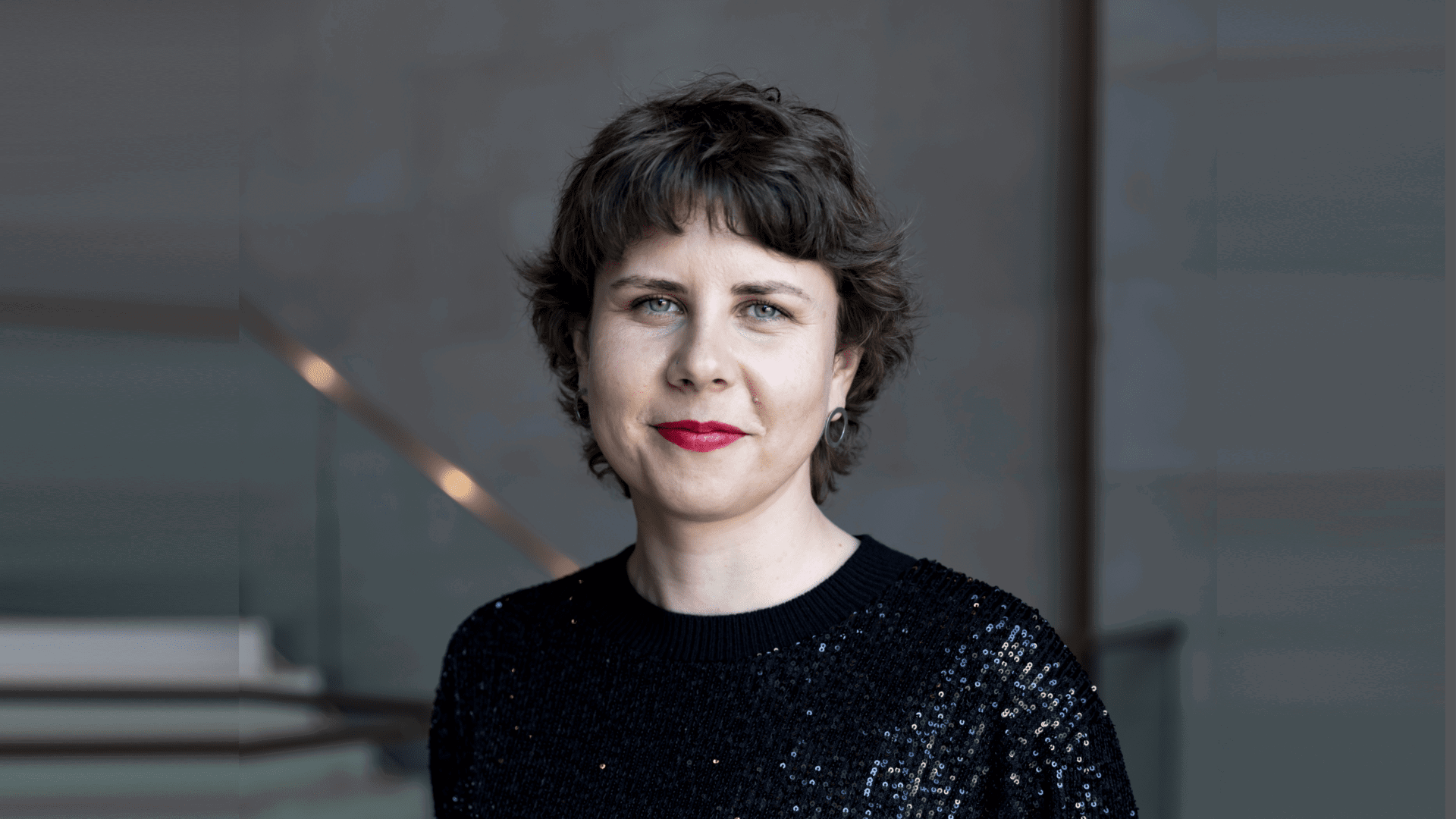
© © ifa
Gitte Zschoch took over as ifa Secretary General on 1 October 2021. In addition, she is a member of the advisory board and board of trustees of the Akademie Schloss Solitude Stuttgart and an expert member of the Committee for Culture and Media (AKM) of the municipal council of the city of Stuttgart.
From 2018 to 2021, she was Director of the European Union National Institutes for Culture (EUNIC) in Brussels. Previously, she worked for the Goethe-Institut in a number of different positions in Seoul, Tokyo, Johannesburg and as Deputy Head of the Communications Division at the head office in Munich, and most recently as the Founding Director of the Goethe-Institut in the Democratic Republic of the Congo. Gitte Zschoch studied Comparative Literature at Ludwig-Maximilians-Universität in Munich and Modern Korean Literature at Seoul National University in Seoul, South Korea.
Speech:
The Ukraine 5 AM Coalition:
Onysia Syniuk,
Lyubov Smachylo,
Olena Zadorozhna.
Friends of culture and guests,
Dialogue, understanding and empathy. That is what we are committed to at ifa – Institut für Auslandsbeziehungen – the world over. We seek to connect people across borders.
This is most needed in places where rifts and injuries run deep. That’s why our work is increasingly focused on areas and regions where things are not running smoothly, to put it mildly. Places beset by crisis and where basic human rights, minority rights, freedom of expression and artistic freedom are limited. At ifa, we have always concerned ourselves with wars and conflicts. In Sudan, Afghanistan, the Democratic Republic of the Congo, Pakistan, Yemen, Ethiopia, Eritrea – and elsewhere in the world. We believe it is important to turn our attention to these places, but we also want to support and empower people around the world to change these conditions for the better. When we at ifa look at where the world is today, it’s very worrying. Because we have the impression – and it’s not just an impression – that stances are hardening, and conflicts are becoming ever more violent. And these conflicts are now reaching regions that have enjoyed peace for many decades.
When I became Secretary General of ifa in October 2021, I never expected that just four months later on 24th February 2022, a terrible war would break out in the heart of Europe with the Russian invasion. It’s true that we have always dealt with the issue of war and conflict at ifa. But, since 24th February 2022, we have become even more aware of the horrors and human rights violations caused by war, and war has moved closer to us and our work. This became clear to us shortly after the outbreak of the war when one of our ifa culture editors had to flee Ukraine for their own safety. It became clear in the fact that we launched several new projects in 2022 to urgently provide support for Ukrainians. It became clear through a mentoring programme for refugee women, through a special series in our podcast, and through a support programme that enabled us to provide direct assistance to Ukrainian artists and civil society actors, thanks to the Ministry of Science, Research and the Arts of Baden-Württemberg. And it becomes clear when we talk to people from Ukraine.
I believe that one of the few things that ensures people do not give up in the face of the kind of injustice and cruelty unleashed by Russia’s attack on Ukraine, is the prospect of justice. Behind this lies the belief in an “after”; a belief that is possible to make the world a better place by standing up for universal values such as artistic freedom, democracy and human rights. At ifa, we truly believe in these values and that’s why today we are delighted to recognize you, Onysia Syniuk, Lyubov Smachylo and OlenaZadorozhna, on behalf of the Ukraine 5 AM Coalition with the ifa Award. Because you also believe in these values and stand up for them so admirably every day. That’s why we have wholeheartedly supported the choice of our ifa Award jury from the very beginning – and jury member and Deputy Government Spokesperson Christiane Hoffmann will now explain the reasons for this choice.It remains for me to thank you as representatives of everyone who is committed to the work of the Ukraine 5 AM Coalition, and all Ukrainians, for holding firm and continuing to stand up for the core values of human rights and justice every single day. Thank you.